by Valerija Stanoevska
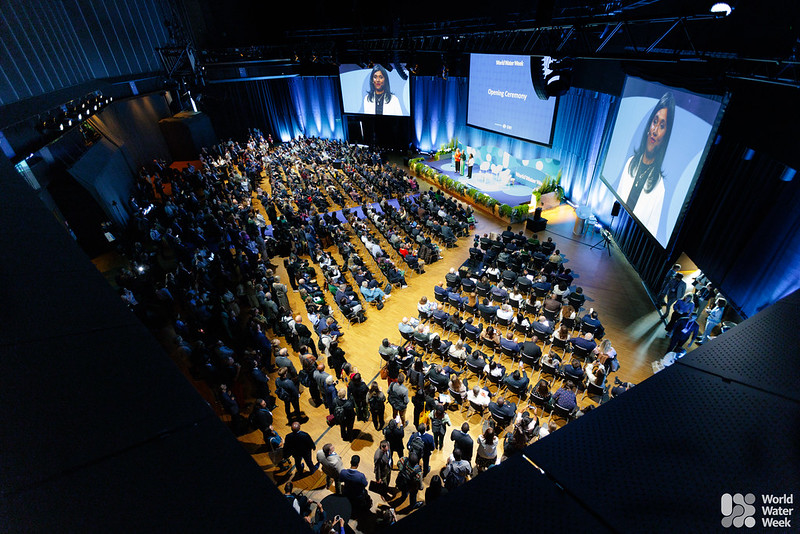
Attending World Water Week (WWW) this year was more than a professional milestone – it was a chance to step outside of daily project work and engage with the global community that is shaping the future of water. The conference brought together governments, development banks, researchers, private sector leaders, and young professionals from across the globe.
For me, it was an opportunity to see the bigger picture of water management: how governance, financing, innovation, and community participation all intersect with the technical solutions we, as engineers, design. Below, I share highlights from the sessions I participated in, the insights I gathered, and the takeaways I’m bringing back to our work on groundwater management and beyond.
Clean Clothes, Clean Planet Workshop
In this workshop, I served as a table host and rapporteur in the discussion on laundry, water, and the environment. Laundry is often overlooked but water-intensive and polluting activity, with significant gender and social dimensions.
Globally, 40–50% of laundry is still done by hand, and an estimated 5.6 billion people wash clothes manually. In low-resource areas, laundry can take up to 20% of active time, mostly shouldered by women. While washing by hand consumes about 20 liters of water per wash, machine washing requires around 75 liters per load. A study from 2010 estimated that domestic washing machines use about 20 trillion liters of water per year worldwide.
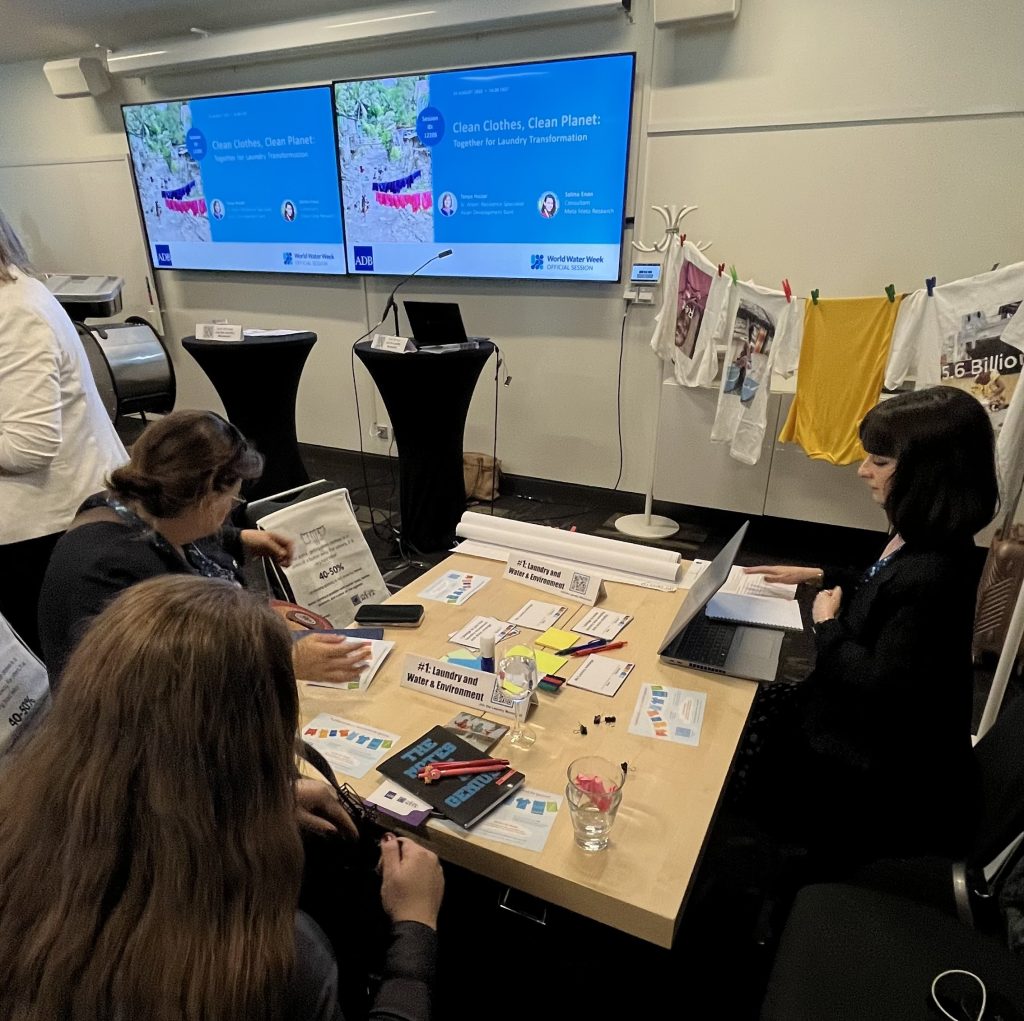
The environmental impacts are equally pressing. Laundry contributes heavily to microplastic pollution. On average, over 700,000 microplastic fibers are released per wash from synthetic fabrics such as polyester or nylon. A single dryer can discharge up to 120 million microfibers yearly – up to 40 times more than a washing machine. These microfibers travel into wastewater and eventually into rivers, lakes, and groundwater, infiltrating drinking water supplies, food sources, and even human bodies. Alarmingly, there is no real difference between handwashing and machine washing in terms of microfiber discharge.
As I reflected on this session, one thought stayed with me:
“Rethinking laundry is a powerful step toward sustainable water management and social wellbeing, highlighting how routine household activities impact communities and create opportunities for climate action and meaningful social progress.”
The message was clear: even small, everyday actions like laundry have untapped potential for climate action and water resilience.
Shark Tank Panel Session: Climate-Smart Water Resources and Irrigation Management: Case Studies from Asia
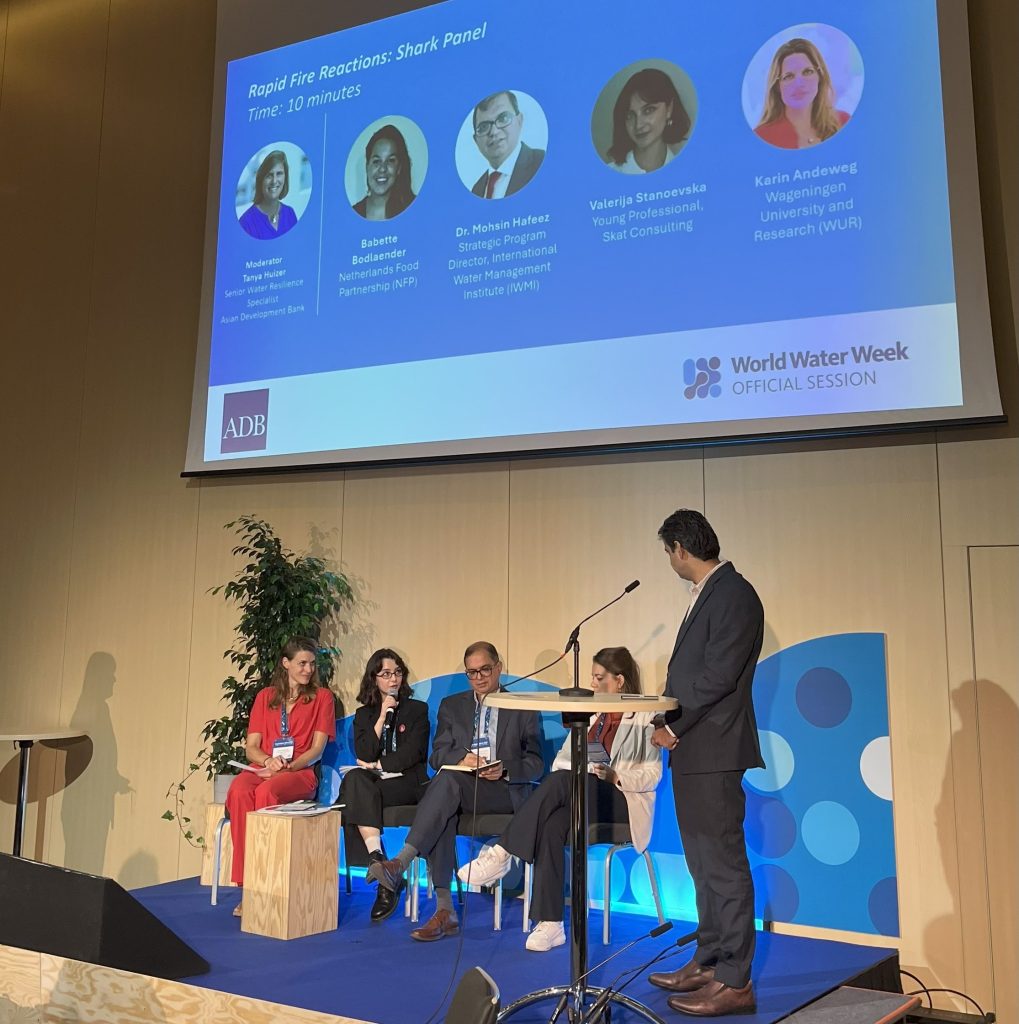
One of the highlights of the week was serving as a “female shark” in the Shark Tank session on climate-smart water and irrigation, convened by the Asian Development Bank. The format was dynamic: project teams pitched real-world pilot initiatives, while panelists like myself raised critical questions, and explored how to scale these ideas.
The four projects, from Cambodia, India, and Pakistan, demonstrated how climate adaptation and mitigation can be embedded in water-for-food systems.
Floods and Flows: Climate Adaptive and Mitigative River Basin Management in Cambodia tackled climate-induced droughts, floods, and degraded infrastructure with adaptive reservoir operations and revitalized flood channels. The project also integrates fish-friendly designs and floating solar solutions to balance ecological and energy needs.
Transformative Pressurized Piped Irrigation: Unlocking Economic Barriers (Mohanpura–Kundalia Irrigation Project, India) showcased the world’s largest pressurized irrigation network, covering 290,000+ ha with 26,000 km of pipelines, 20 pumping stations, and SCADA-enabled volumetric controls. With water-use efficiency 2.5× higher than traditional canals, the system ensures equitable, on-demand supply directly to farms. This has reduced migration, improved livelihoods, and increased school enrollment.
Megha-ADAPT: Community-led Adaptation Mission for Water & Economic Security in Meghalaya (India) addressed the paradox of one of the wettest regions on earth facing severe water scarcity. With 500+ water harvesting structures, afforestation, and revival of 30,000+ drying springs, the program integrates weather stations, solar pumps, and micro-hydro systems. It empowers 530+ local groups, with 25% women leaders, linking water security to green livelihoods.
Breaking the Path Dependency (Pakistan) focused on the challenge of moving beyond conventional irrigation practices that lock communities into unsustainable cycles of water use. By testing climate-smart irrigation, decision-support tools, and participatory watershed management, the initiative is helping communities build resilience against both short-term shocks and long-term risks.
Across these case studies, common themes emerged: the need for climate-smart water resource management, near real-time optimization of irrigation systems, and the importance of inclusive, community-led approaches. Yet the challenges to scaling remain – from technology adoption barriers and financing gaps to smallholder dynamics and institutional resistance to change. Together, these pitches underscored that while technical solutions are advancing, collaboration and commitment at multiple levels are essential to unlock their full potential.
From Risk to Resilience: Strengthening Asia’s River Basins
This workshop, convened by the Asian Development Bank, focused on integrated water resources management (IWRM) in the face of climate change. I supported the flood risk management table, where participants from across Asia and beyond exchanged experiences and solutions.
The conversation highlighted today’s toughest challenges, such as changing rainfall patterns, governance gaps, and unreliable data systems. Yet participants also pointed to quick wins already within reach: strengthening community early warning systems, improving predictive modeling, and expanding the use of smart monitoring technologies like SCADA. For the long term, nature-based solutions stood out as critical pathways – from reforestation and catchment restoration to full-scale river basin rehabilitation.
For me, the big takeaway was clear – real progress happens by bridging technical innovation with institutional capacity and community engagement – a lesson highly relevant to our own basin and groundwater work.
Closing Reflection
World Water Week gave me three main takeaways:
1. Integration is key: Engineering solutions alone are not enough. Success requires governance, financing, and community buy-in.
2. Innovation matters: From SCADA-enabled irrigation networks to alternative wetting and drying methods, the next generation of water management is about smarter, adaptive systems that minimize water losses and improve resilience.
3. Local voices count: Farmers and communities must be at the center of solutions. Without their engagement, even the best technology will fall short.
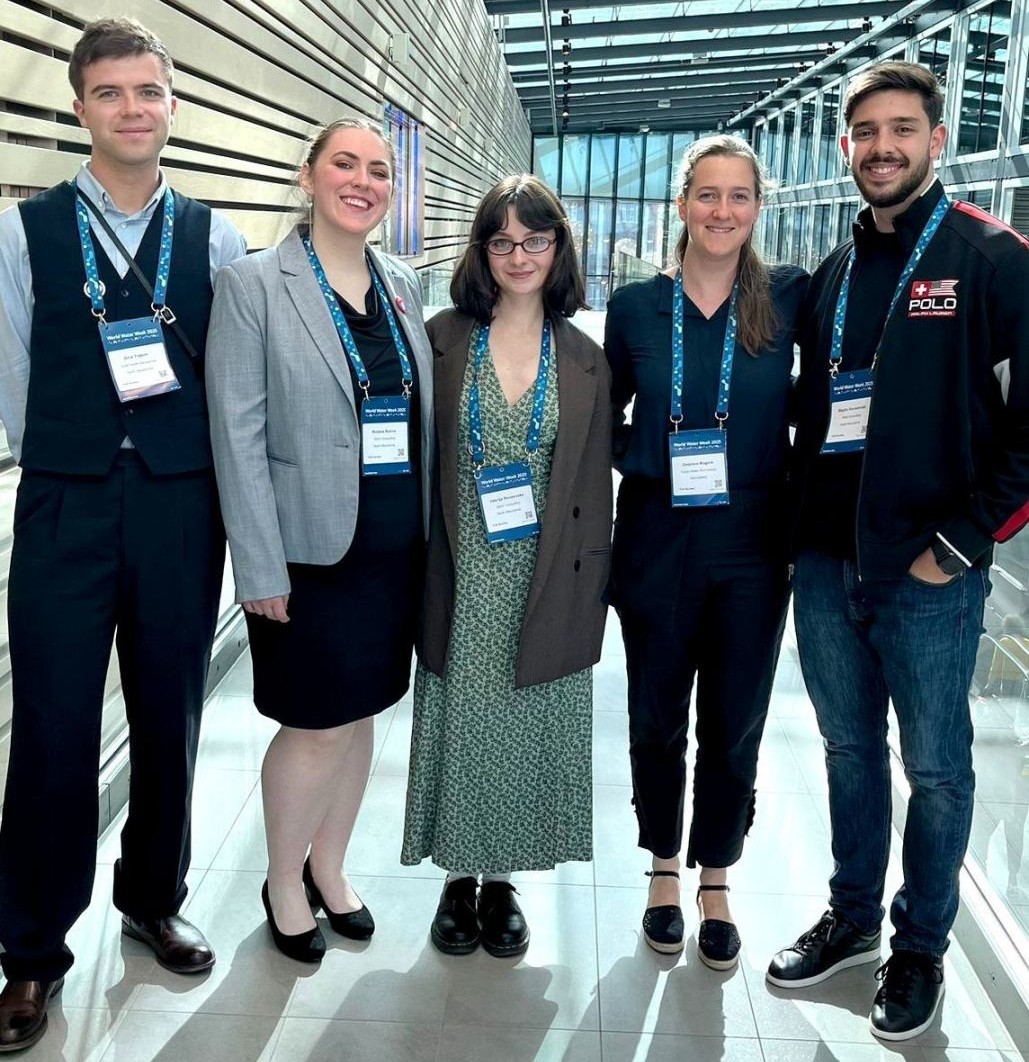
For me, WWW was both inspiring and motivating. It gave me a broader perspective on water management at the global level and renewed my commitment to bringing those insights home – especially into our ongoing Groundwater Management, Use, and Protection Programme.
As engineers, we focus on technical precision and design. But WWW reminded me that the future of water lies in linking engineering with governance, community resilience, and sustainability. That’s how we truly build a resilient future.
M. Sc. Valerija Stanoevska is a River Basin Management Professional at the Groundwater Management, Use and Protection Programme